What exactly is the "Internal Force" (Nei Jin) in Tai Chi, and how do I develop it?
The concept of Nei Jin (Internal Force) is often misunderstood by those practicing Tai Chi for beginners. Many mistake it for mere muscular strength or brute power. In reality, Nei Jin is a refined, integrated power. It is generated through precise structural alignment and unwavering mind-intent (Yi). Developing this force is the single most critical step in moving beyond merely mimicking the external Tai Chi forms. True mastery demands rigorous Tai Chi posture correction and a deep understanding of core Daoist principles. This article will demystify Nei Jin. We will clarify its essential components and provide a practical roadmap for its development. This ensures your practice yields true physical and energetic transformation.
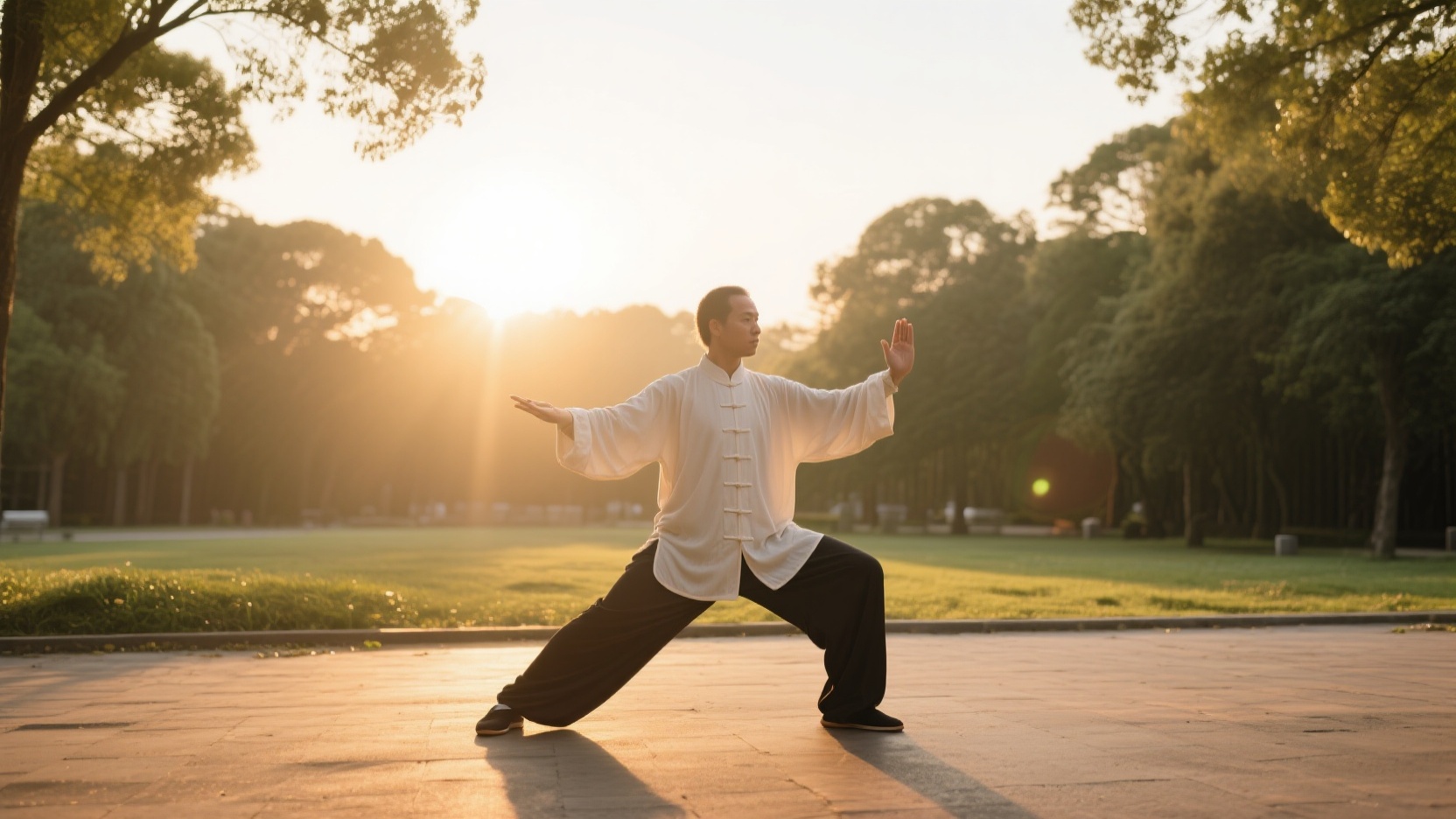
Demystifying Nei Jin: Integrated Power vs. Muscular Strength (Lì)
In traditional Tai Chi styles, Nei Jin is defined by what it is not. It is fundamentally different from Lì (brute muscular force). Lì is tense, exhausting, and linear. Nei Jin is elastic, fluid, and circular. It harnesses the body's natural structure and gravity.
Nei Jin is developed by rooting the body and cultivating continuous internal connection. When correctly executed, the force should feel like a wave. It moves seamlessly from the feet, through the legs, and up to the waist. It is then expressed through the hands or arms. This allows a small practitioner to issue explosive power with minimal muscular exertion. Key characteristics include:
- Wholeness: All body parts move as a single, coordinated unit.
- Pliability: The force is resilient and highly adaptive, like a spring.
- Rooting: The practitioner maintains a constant connection to the ground, allowing force to be drawn from the earth.
The Foundational Triad: Qi, Jing, and Shen
Nei Jin cannot be developed through physical exercise alone. It is reliant on the cultivation of the Three Treasures (San Bao). These are the energetic foundation of all Daoist internal arts. Integrating these three energies—Essence, Energy, and Spirit—is the true secret to activating Internal Force.
Jing (Essence) and the Dantian
Jing (Essence) is the foundational energy of the body. It is stored in the lower Dantian (Elixir Field). The Dantian is located roughly two inches below the navel. Developing Nei Jin requires careful preservation and refinement of Jing. This is achieved by relaxing the musculature. When the body is relaxed and aligned, Jing is allowed to transform efficiently into Qi.
Qi (Vital Energy) Cultivation
Qi (Vital Energy) is the refined energy that flows through the meridians. In Tai Chi, the goal is to guide Qi through focused movement and breathing. This guidance must be free of blockage or tension. A strong, smoothly flowing Qi is essential for issuing power. Without it, Nei Jin remains merely a conceptual theory.
Shen (Spirit/Mind) and Intent (Yi)
Shen (Spirit) is the highest treasure. It relates directly to your consciousness and focus. The practical application of Shen in Tai Chi is called Yi (Intent). The Yi must always precede the Qi, and the Qi must always precede the movement. The mind guides the energy, and the energy then moves the body. This mind-over-muscle coordination is the final activation key for Nei Jin.
If you are struggling to achieve this integration or fear developing bad habits through self-instruction, systematic guidance is crucial. A proven program can help you correct fundamental errors before they become ingrained and limit your ability to generate true internal power. Gain the precision and structure you need now.
Practical Application: Posture, Movement, and Mind
Developing Nei Jin requires consistent, deliberate practice focused on three specific areas. These techniques move the student from an external, muscular approach toward a fully internal, integrated system. This helps Tai Chi for beginners develop safely and effectively.
1. Achieving Rooted Alignment for Tai Chi Knee Protection
Correct alignment is non-negotiable for Nei Jin. The practitioner must achieve a state often described as Wuji (Primordial Void) or standing like a tree. This means the head is suspended gently from above. The shoulders are relaxed. The lower back is gently rounded to release tension. This posture allows Qi to sink effectively to the Dantian.
- Kua Opening: The hip creases (Kua) must remain open and flexible. This is vital for Tai Chi knee protection, as it shifts the turning motion away from the knee joint.
- Sinking the Qi: Ensure you are standing rooted. This means feeling your weight sinking into the soles of your feet. This sinking sensation greatly helps improve balance.
- Tai Chi Posture Correction: Regularly check that your spine is aligned vertically. Do not lean forward or back.
2. Mastering the Separation of Hollow and Full (Xu Shi)
Nei Jin relies entirely on sophisticated weight transfers. This is known as Xu Shi (Hollow and Full). When one leg is "Full" (weighted), the other must be "Hollow" (empty, ready to move). This mastery allows for quick changes of direction and expression of elastic force.
A true master moves only the weight, never the center of gravity. Practice single-weighted stance work rigorously. This teaches the body to maintain stability and improve balance even during slow, complex movements. The ability to shift seamlessly is the foundation of yielding and issuing power.
3. Sustaining Intent (Yi) During Form Practice
Once your posture and weight transfers are correct, you must add Yi (Intent). Do not just perform the movement. Instead, imagine the energetic trajectory of your action. Focus on a point just beyond the physical contact.
For example, when pushing, imagine the energy traveling through the target and out the other side. This focused mental effort is what coordinates the Jing, Qi, and Shen into Nei Jin. The cultivation of Yi turns a physical exercise into genuine internal training.
Developing Internal Force is a transformative but demanding path. It requires dedication, precise feedback, and a step-by-step curriculum guided by Master-level instruction. Don't risk years of practice based on guesswork or self-correction that may lead to injury or stalled progress. Our comprehensive online program provides the meticulous structure necessary to cultivate Nei Jin safely, ensuring every movement builds integrated power and stability.