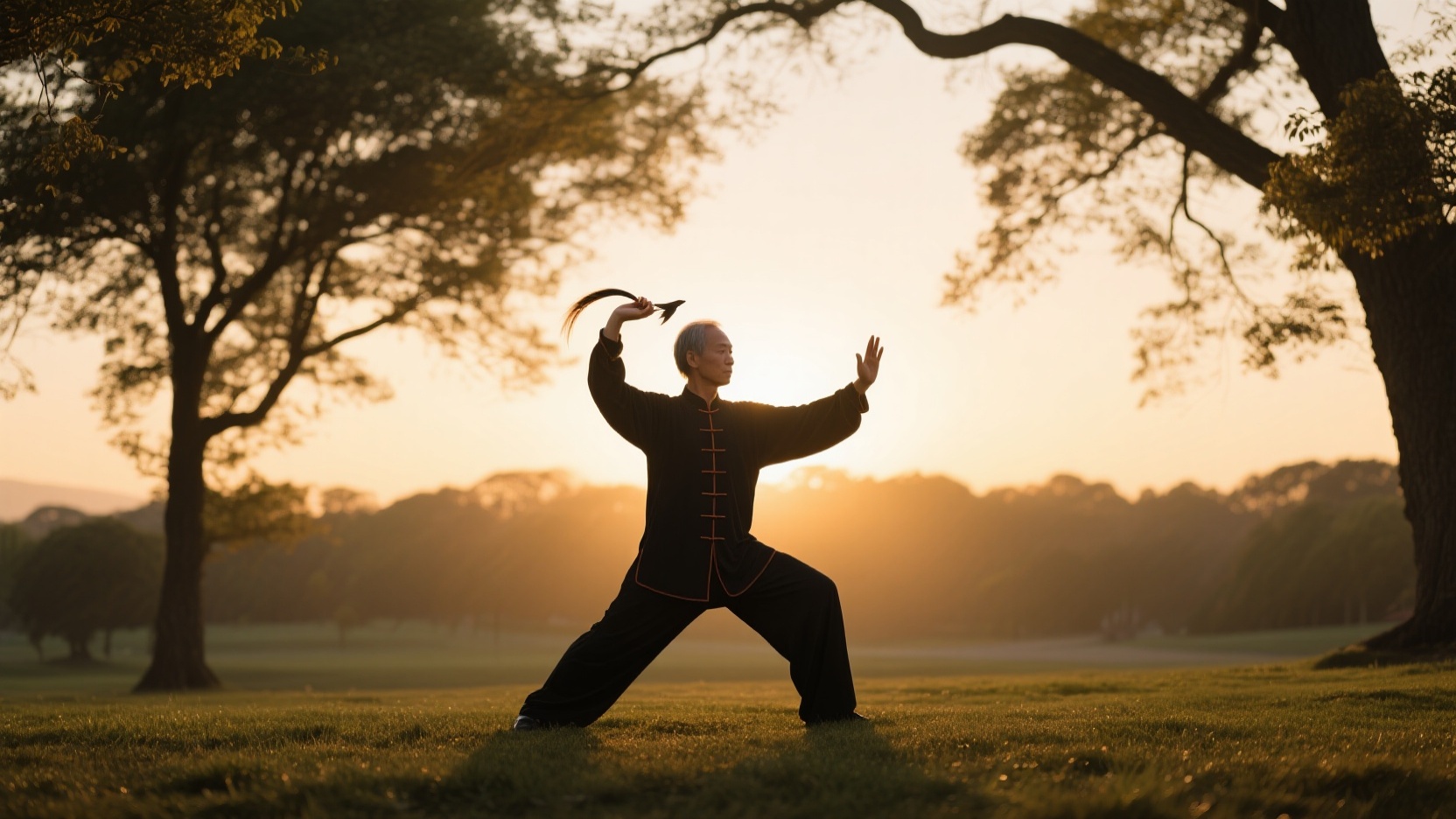
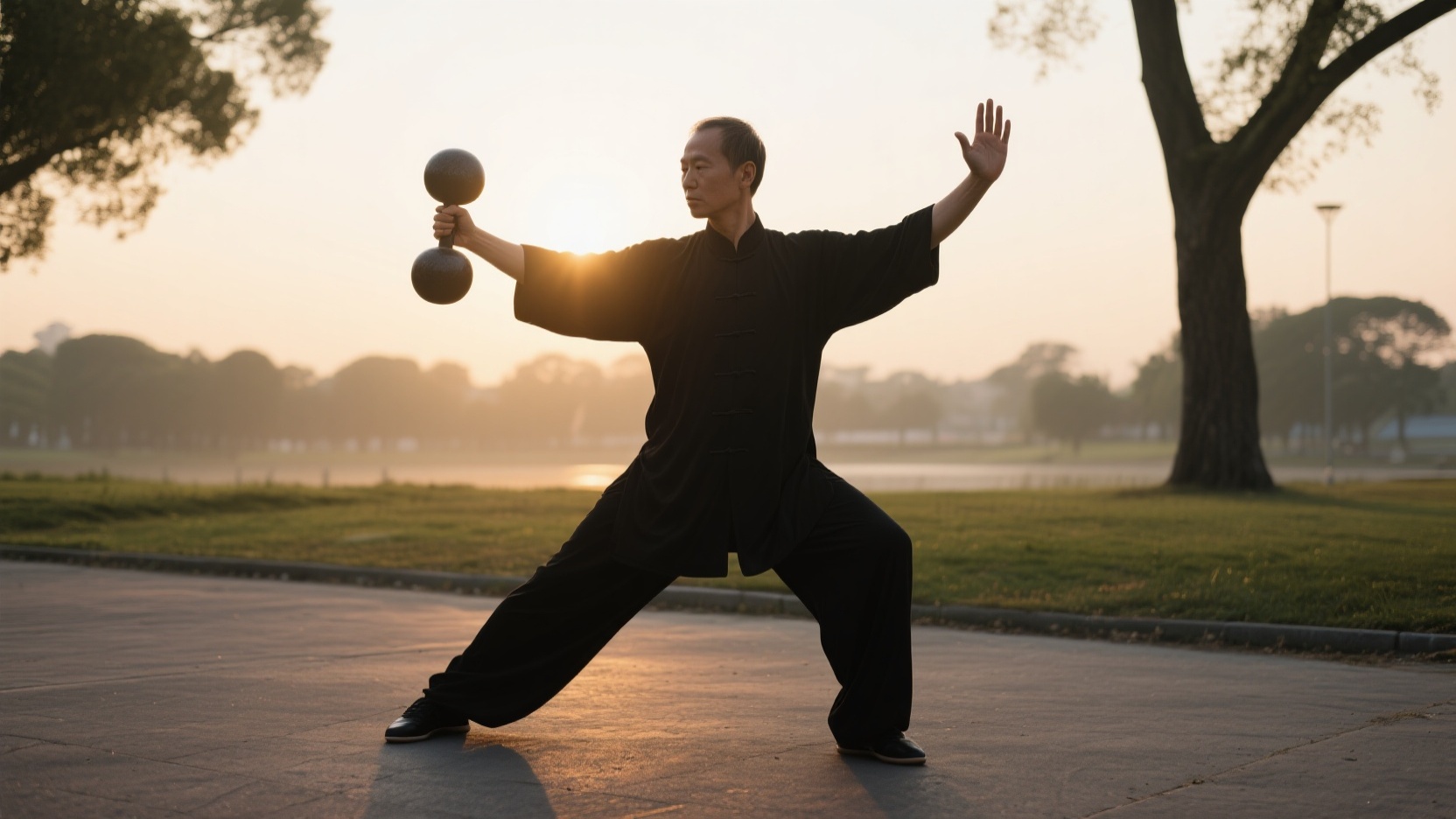
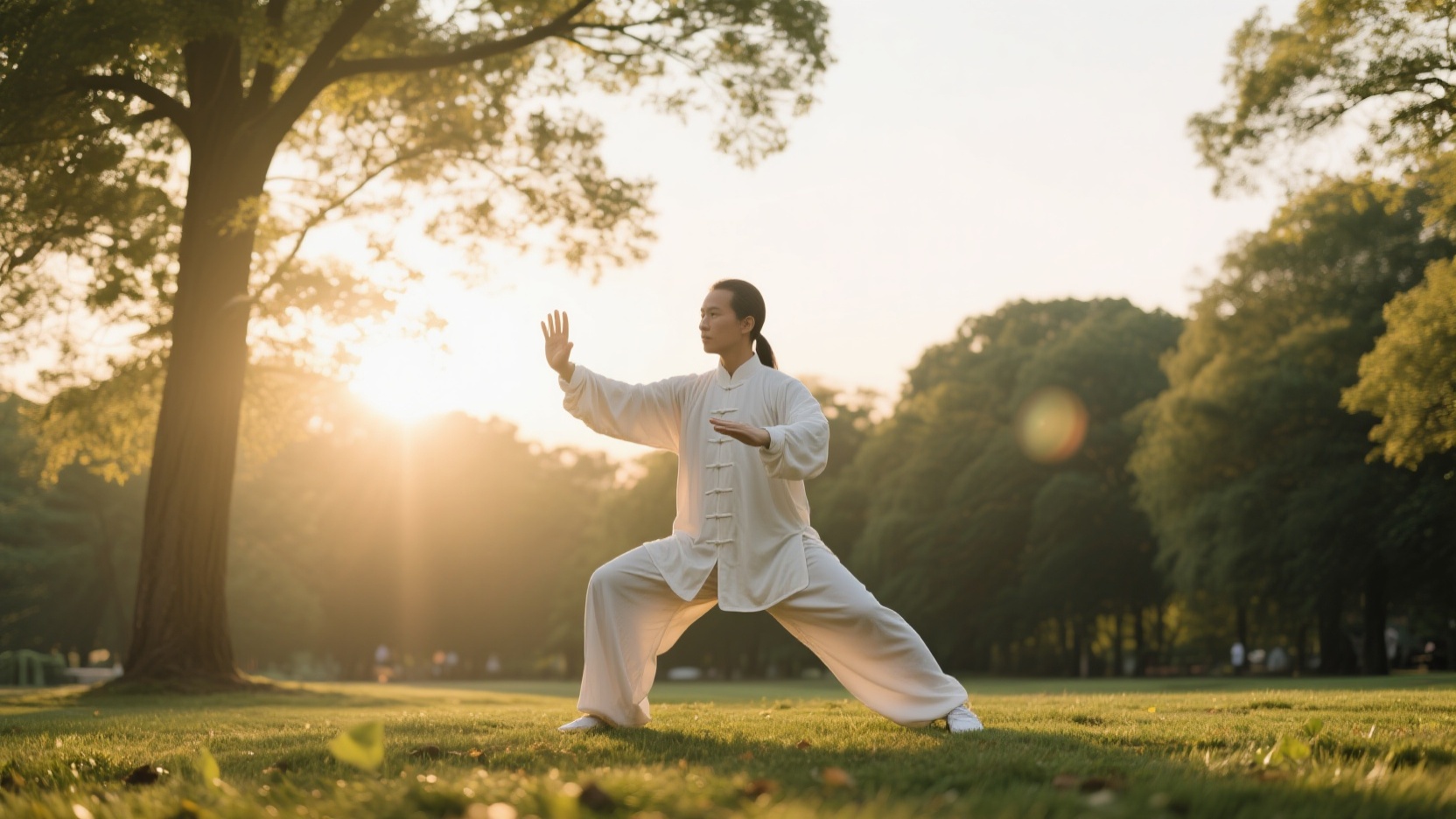
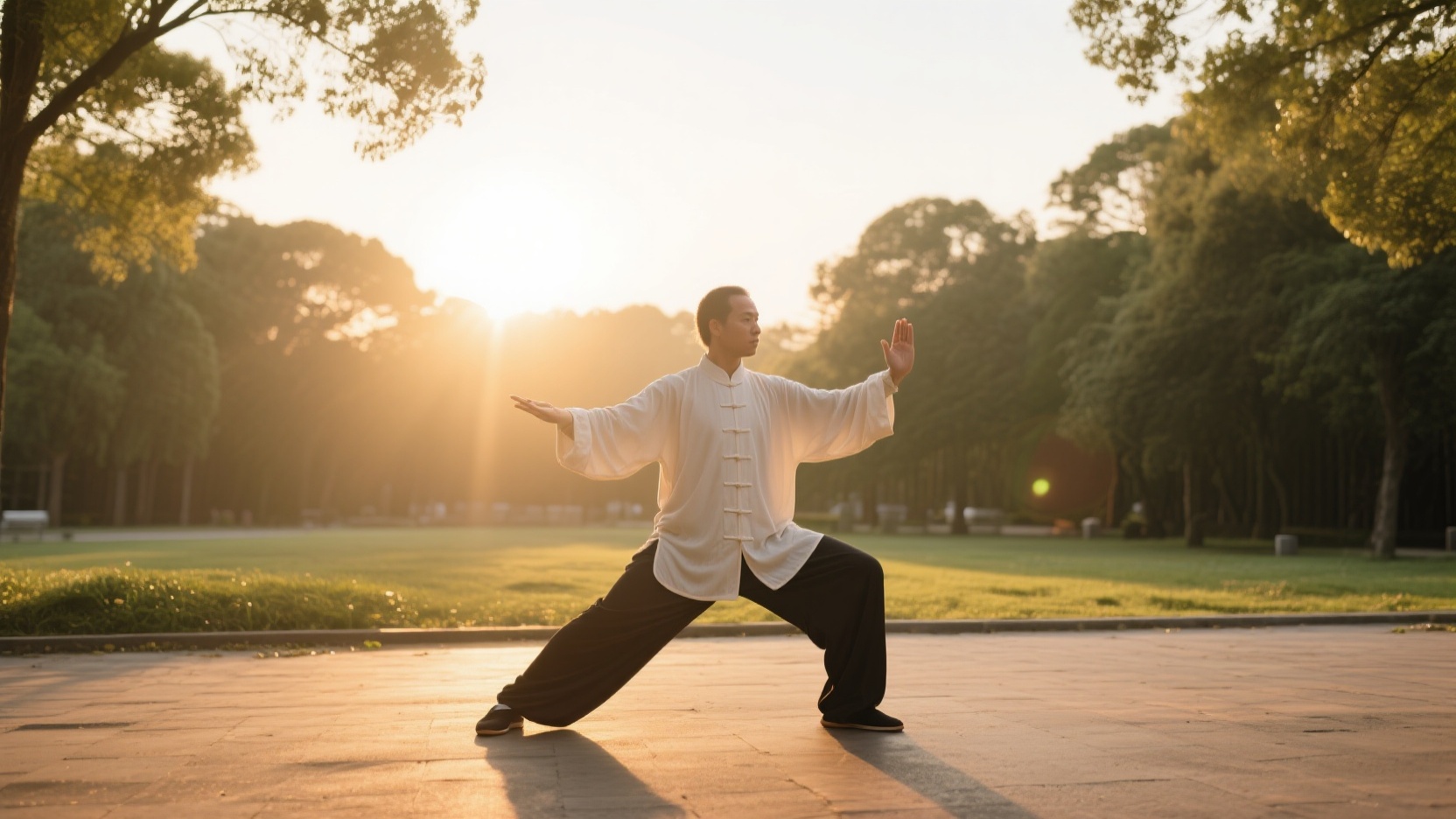
Compared to Tai Chi barehand forms, is Tai Chi Sword a more comprehensive full-body workout?
This is a common question that often confuses those studying Tai Chi for beginners. The short answer is yes, the Tai Chi Sword form introduces dimensions of complexity that barehand forms do not. However, this increased demand is only truly beneficial after mastering the fundamental mechanics of the unarmed practice. While barehand forms are superior for initial grounding and Tai Chi posture correction, the weight and extension of the jian (straight sword) require greater stabilization, core engagement, and precise coordination, leading to a unique and comprehensive full-body workout.
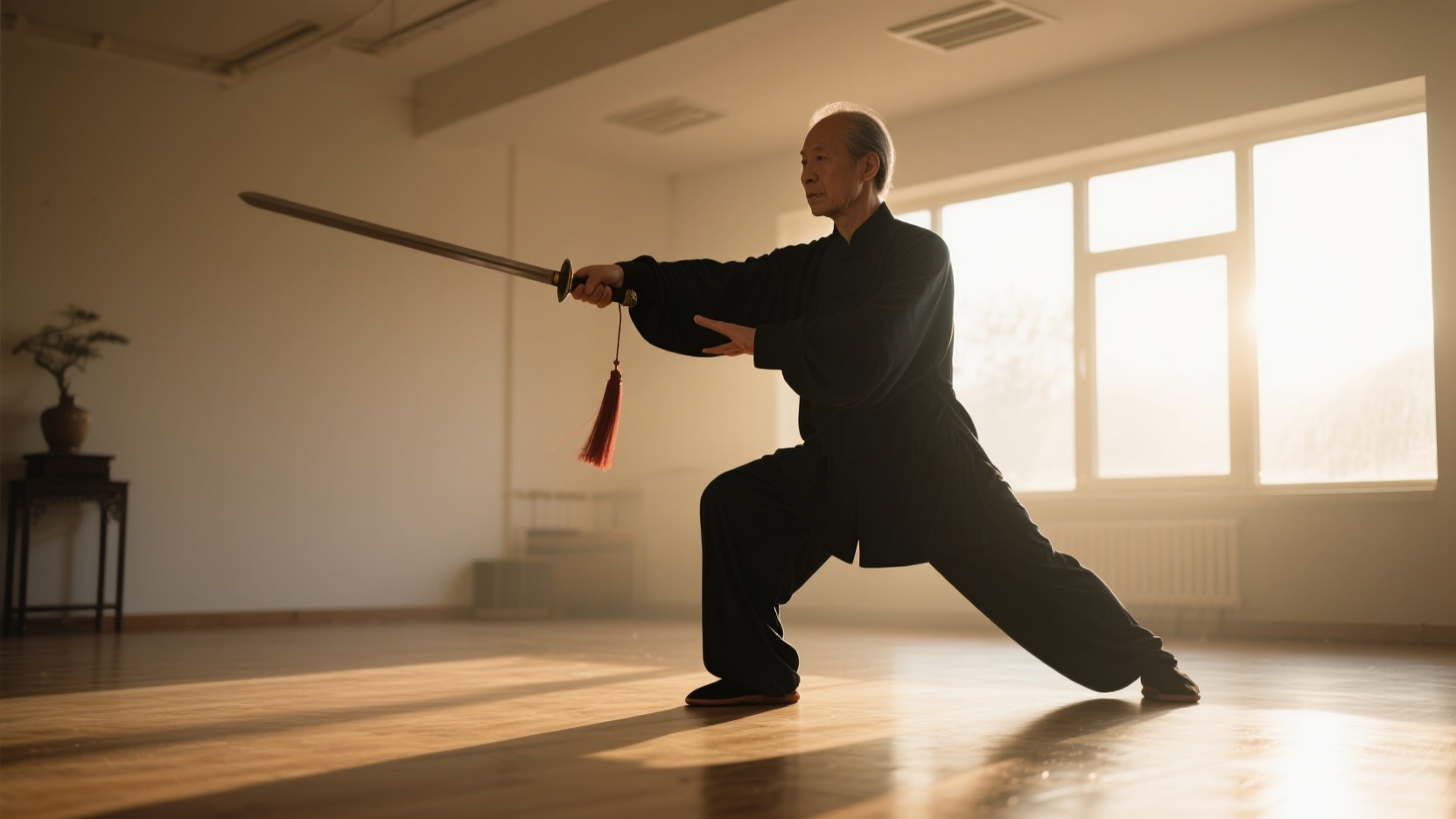
As practitioners progress, the Tai Chi Sword requires the integration of internal power (Jing) and focused mind-intent (Yi) through an external medium. This significantly elevates the physical and mental demands, pushing the limits of existing stability and control necessary to improve balance and execution across different Tai Chi styles.
The Foundational Requirement: Internal Mechanics vs. External Resistance
The primary purpose of barehand Tai Chi is to establish the internal engine. This means developing proper rooting, aligning the spine, and cultivating the Qi (Vital Energy) within the Dantian (Elixir Field). Without this foundation, adding a weapon merely amplifies existing postural flaws.
Why Barehand Practice is Non-Negotiable
Barehand forms are essential for building the specific strength needed to perform the movements safely and effectively. Crucially, they teach you how to protect your joints. For effective Tai Chi knee protection, the foundational practice must instill:
- Rooting: Learning to sink the weight completely, using the ground for stability.
- Spinal Alignment: Maintaining the vertical axis so that power flows unimpeded.
- Body Unity: Ensuring the movement of the extremities originates from the core, not isolated muscles.
When this internal structure is weak, introducing the weight of a sword places excessive torque on the knees and lower back, often leading to injury rather than enhanced fitness.
Biomechanics of the Blade: Increased Complexity and Muscle Recruitment
Once the foundational posture is established, the Tai Chi Sword truly shines as a challenging full-body exercise. The sword acts as an extension of the practitioner’s Qi (Vital Energy). Unlike barehand forms, the sword introduces asymmetrical loading and highly specific rotational demands.
Precision, Stability, and the Wrist
Holding the sword requires constant, subtle muscular activation across the entire kinetic chain. This elevates the workout intensity in three key areas:
- Shoulder Stability: The arm must maintain a perfect relationship with the shoulder socket, especially during thrusts and cuts, demanding continuous engagement of the rotator cuff and upper back muscles.
- Core Stabilization: The torso must counteract the leverage created by the sword's weight and momentum, forcing deeper engagement of the transverse abdominis and oblique muscles for improved balance.
- Wrist and Finger Dexterity: The wrist must be alive yet stable, controlling the tip of the blade with precision. This fine motor control is much less emphasized in barehand forms.
The necessity to constantly manage the blade’s weight against gravity ensures that the muscles are recruited in a more intense and complex manner than in the unarmed practice.
If you are struggling with the transition from simple movements to full, integrated forms, or if you worry about making costly errors in self-taught practice, systematic guidance is crucial. Start your journey with clear, step-by-step instruction focused on optimal alignment and safety.
The Mental Edge: Integrating Intent (Yi) and Spirit (Shen)
The "comprehensiveness" of the sword form is not solely physical; it is deeply energetic and psychological. In advanced practice, the Tai Chi Sword is less about the choreography and more about the integration of Shen (Spirit or Mind). The mind must project the intent (Yi) to the very tip of the blade.
Refining Awareness Across Different Tai Chi Styles
Practicing with a weapon demands an unparalleled level of mental focus. Any lapse in concentration immediately results in the blade becoming sloppy or uncontrollable. This heightened awareness turns the practice into a powerful exercise in mindfulness, linking physical movement directly to internal state.
- Mind-Body Integration: The need to project power into the weapon forces a stronger connection between the physical body and conscious intent.
- Energetic Extension: Learning to move the Qi (Vital Energy) through the arm and into the sword is a core Daoist principle that the weapon helps to illustrate and cultivate vividly.
- Increased Endurance: The physical and mental demands, combined with intricate footwork characteristic of many Tai Chi styles, result in a workout that challenges both muscular stamina and concentration over sustained periods.
Therefore, while barehand practice is comprehensive for internal development, the Tai Chi Sword is undoubtedly more comprehensive for integrating the physical, energetic, and mental components of the art simultaneously.
Conclusion
The Tai Chi Sword form provides a uniquely comprehensive full-body workout that requires advanced stabilization, coordination, and mental focus. It is an excellent tool for increasing the intensity of your practice, improving balance, and deepening your understanding of energetic extension. However, it serves as an advanced complement to, rather than a replacement for, the barehand forms. Mastery of internal alignment and proper Tai Chi knee protection techniques must always precede the introduction of the sword.
Ready to move beyond surface-level movements and build the rock-solid foundation required for all forms of Tai Chi practice, including advanced weapons? Enroll today in our master-led systematic course designed to correct posture, cultivate internal energy, and ensure lifelong skillful practice.