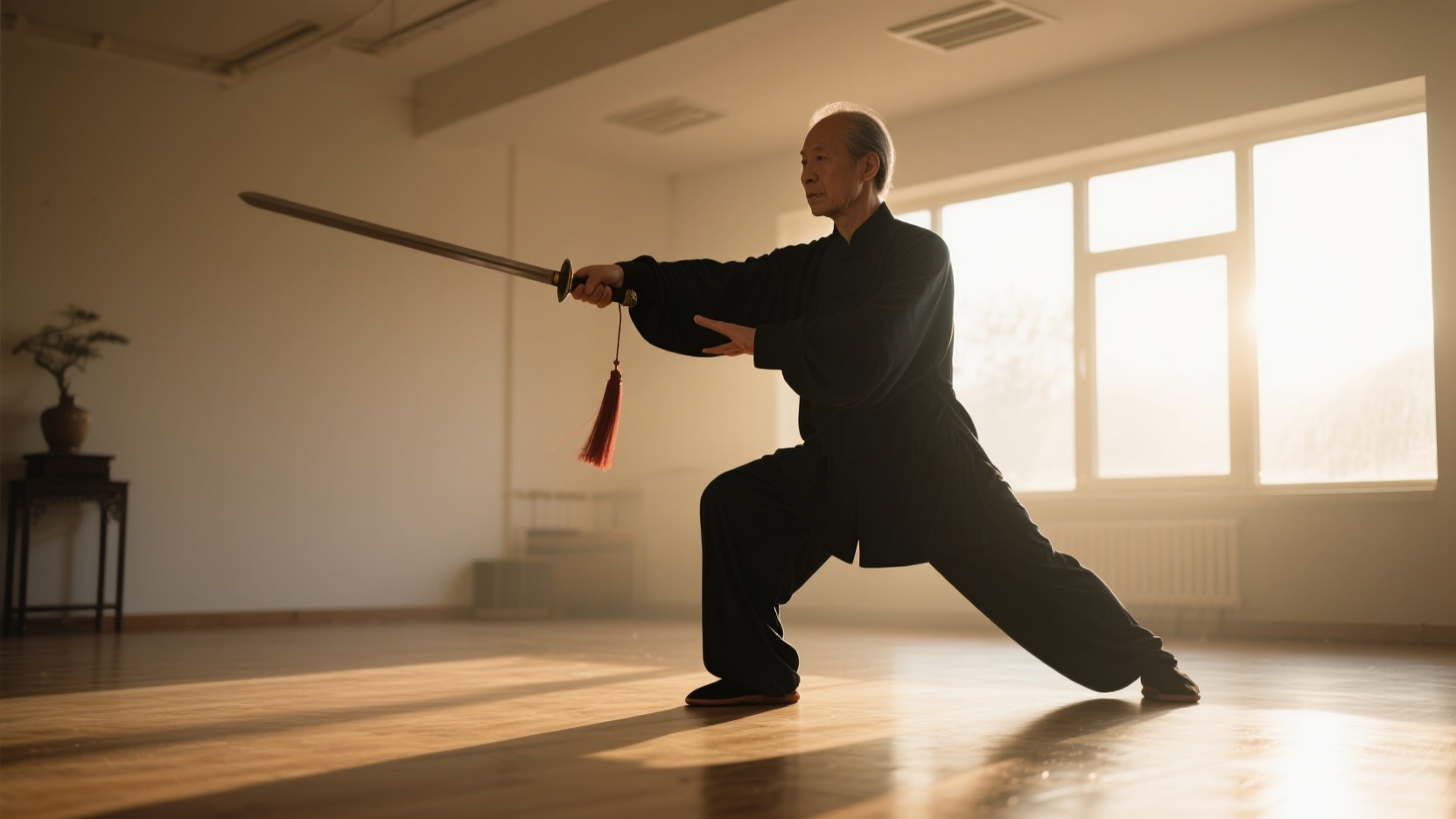
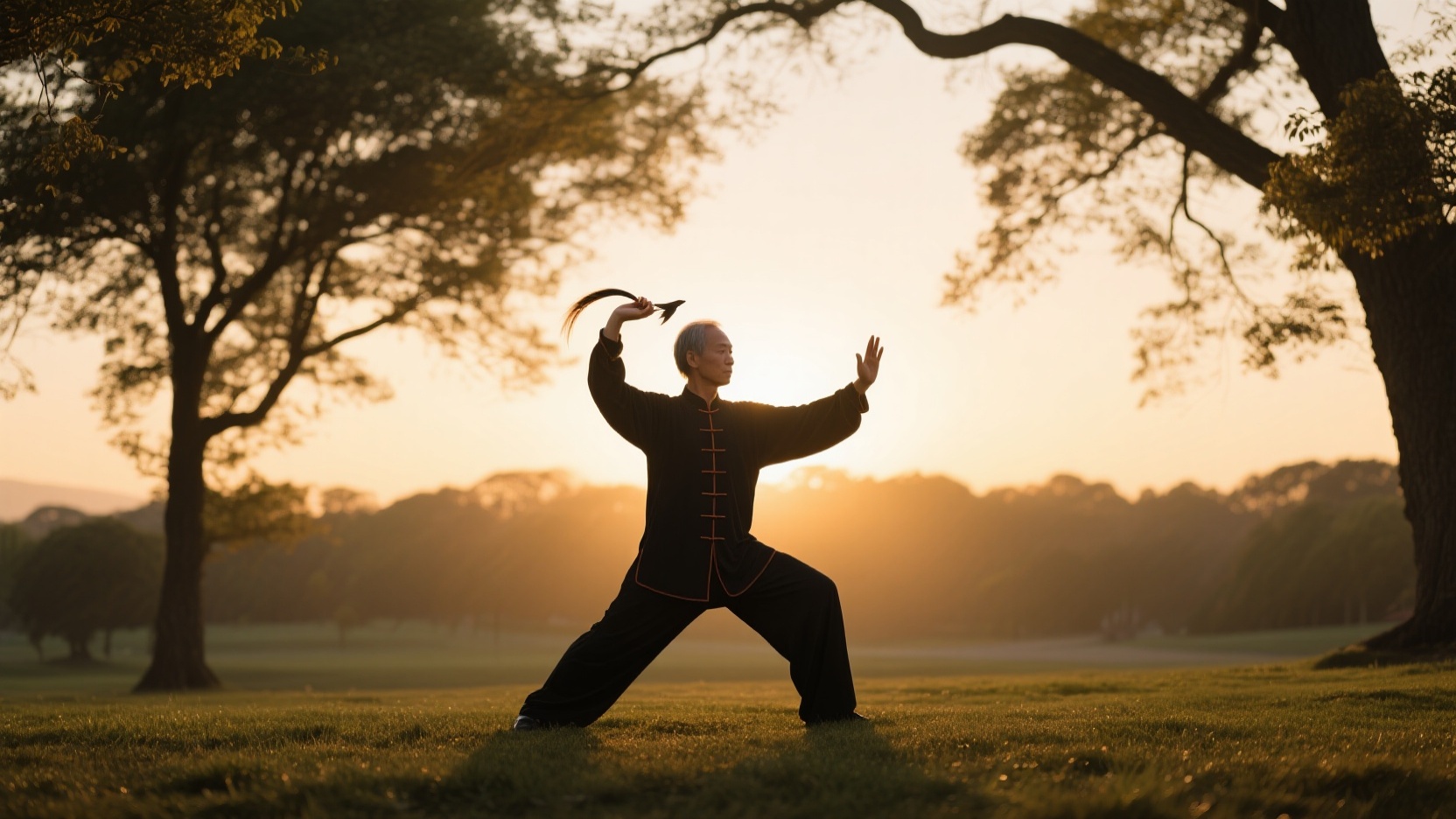
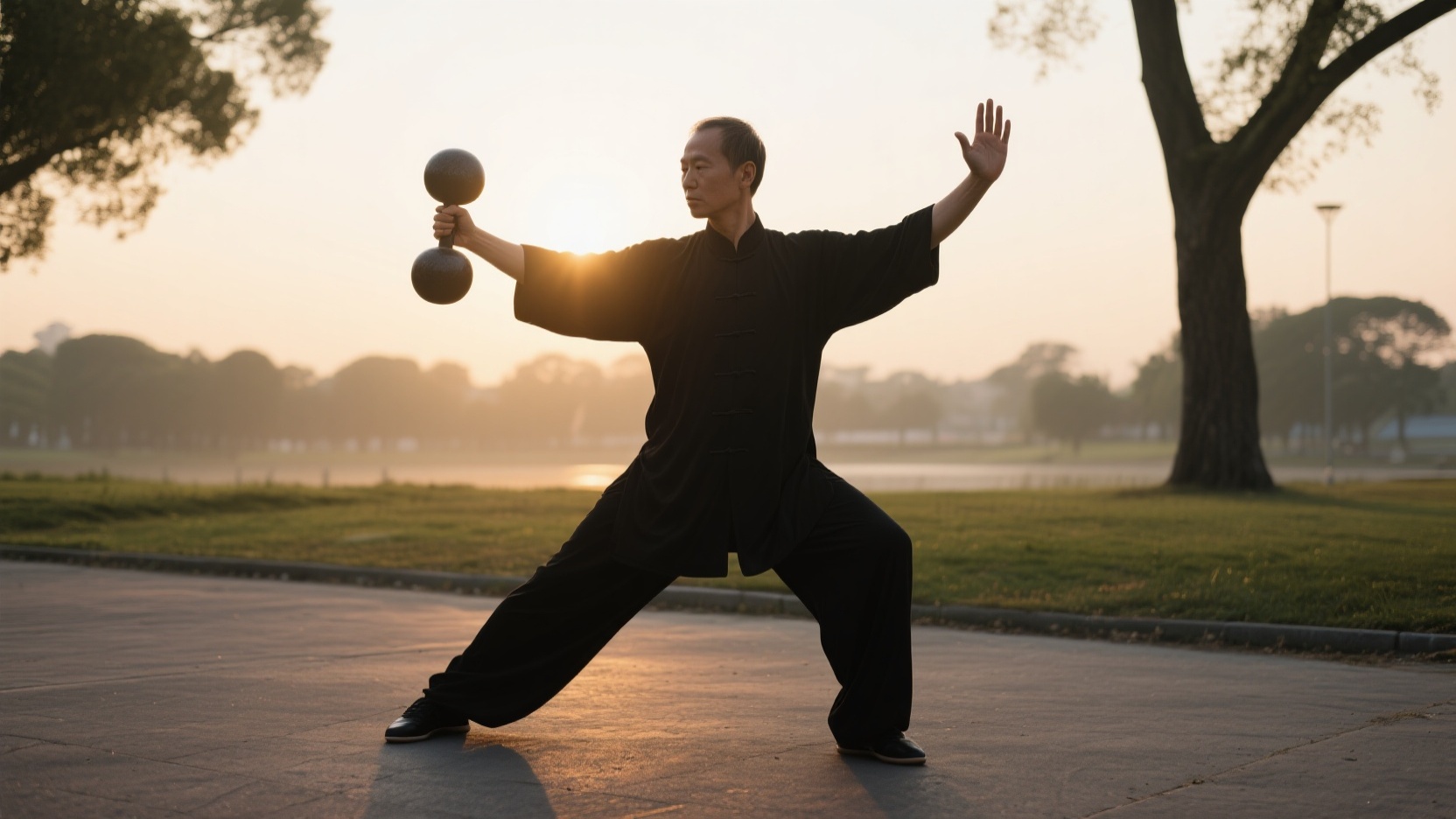
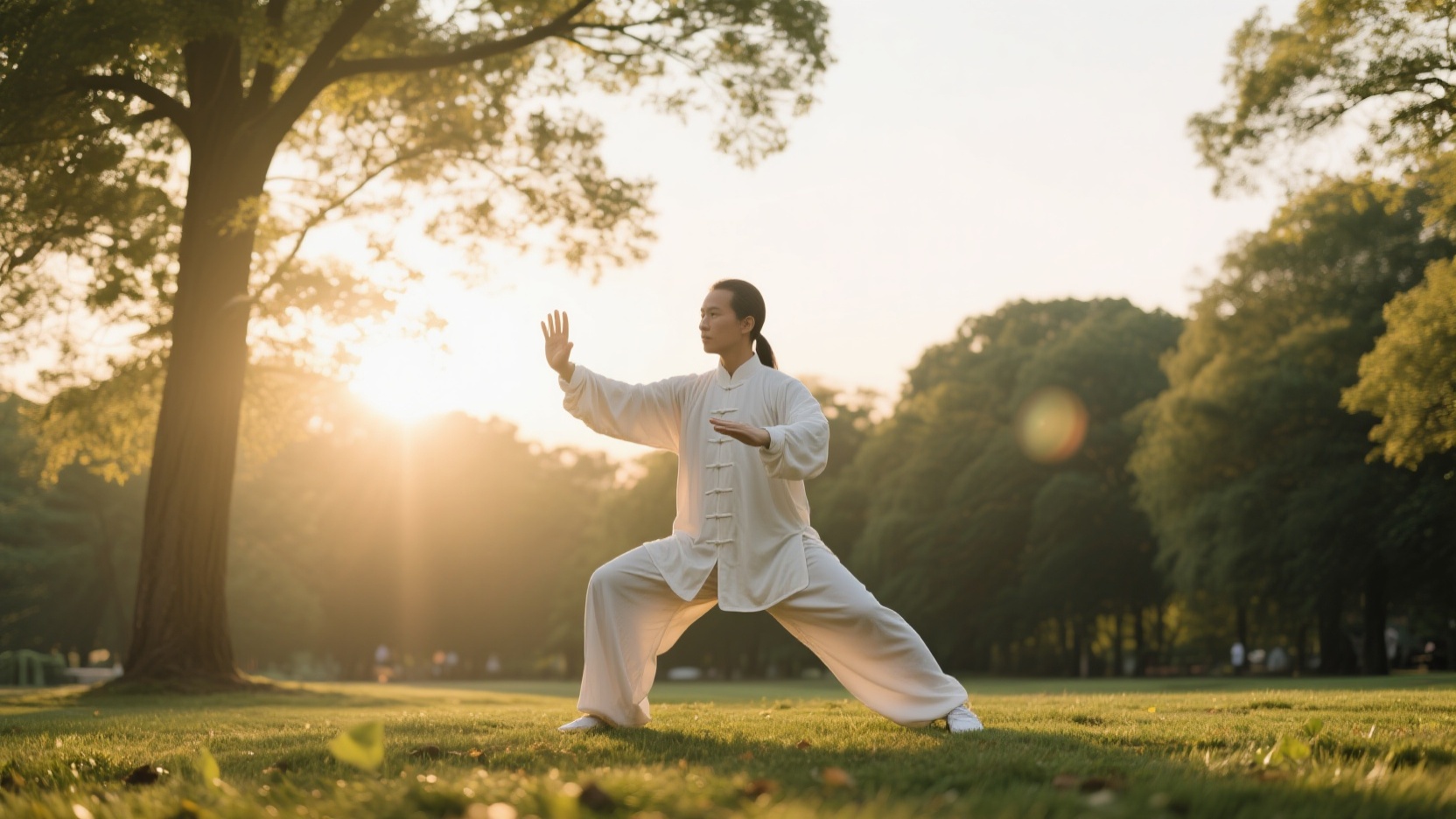
My knees hurt when I practice Tai Chi—5 posture correction techniques to fix it.
It is a common and distressing experience for Tai Chi for beginners: you start practicing this beautiful, flowing art, only to find that your knees hurt when you practice Tai Chi. This pain is not an inevitable side effect of the exercise; rather, it is a clear symptom of structural misalignment stemming from foundational errors in your stance and execution. Protecting your knees is paramount to a successful long-term practice and achieving the profound health benefits of Qi cultivation. This authoritative guide will provide precise Tai Chi posture correction techniques, ensuring proper biomechanics for superior Tai Chi knee protection and an immediate improve balance in your form.
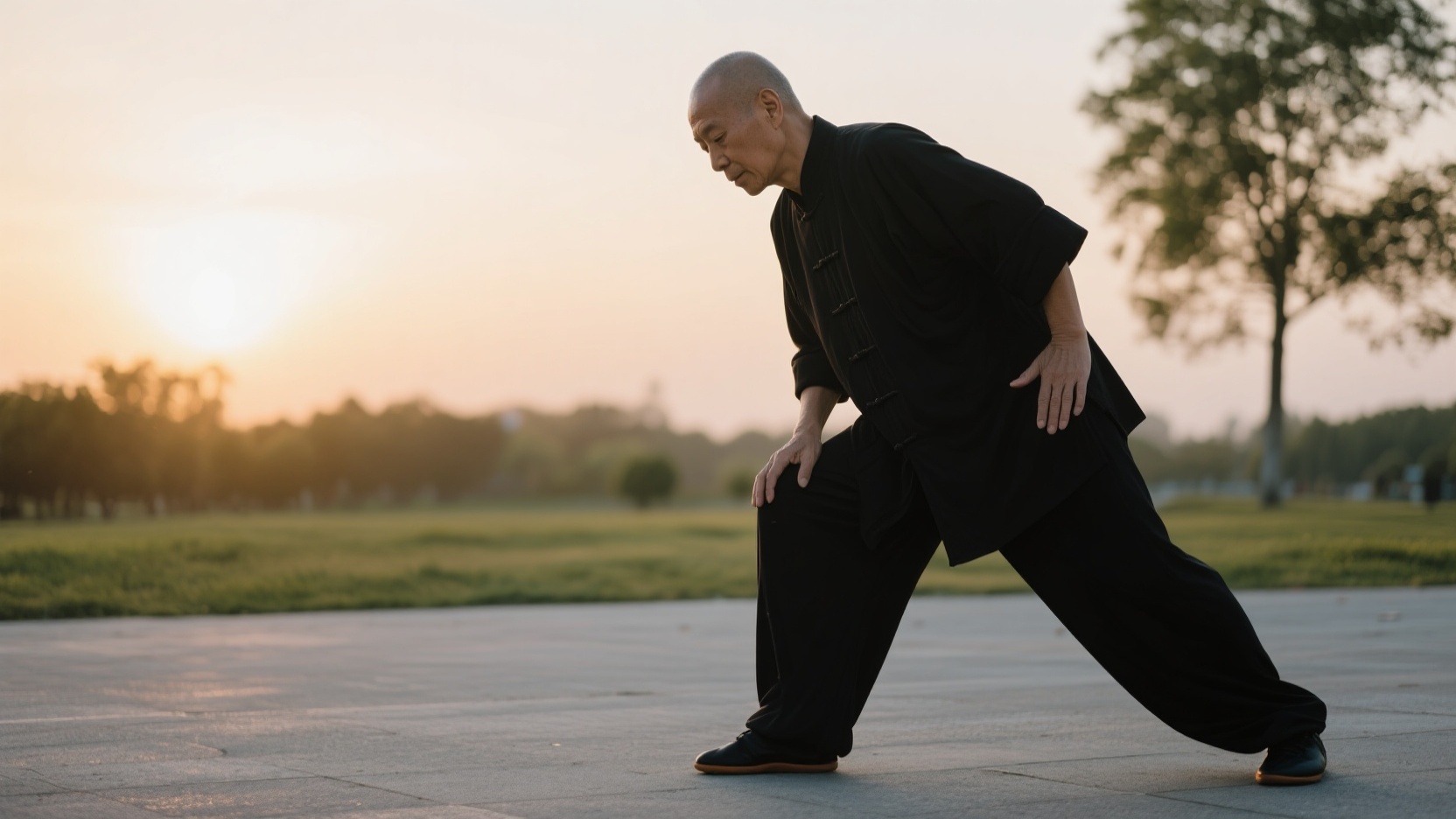
Section 1: The Foundational Principle—Aligning the Three Vertical Planes
The root cause of knee pain in Tai Chi is almost always improper distribution of weight relative to the vertical centerline. In authentic Daoist practice, we seek to unite the physical posture (Jing (Essence)) with the energetic body (Qi (Vital Energy)). This alignment stabilizes the structure and allows energy to flow naturally, protecting the joints.
Centering Your Gravity in the Dantian
Proper Tai Chi technique demands that your physical center of gravity remain directly over your supportive foot. This center is often referenced as the lower Dantian (Elixir Field), located roughly three finger-widths below the navel. When your consciousness is centered here, you naturally avoid leaning or swaying, which places immense, lateral stress on the knees. If your body is learning various Tai Chi styles that require deeper stances, maintaining this verticality is non-negotiable.
Section 2: Technique 1 & 2—The Lateral and Sagittal Plane Corrections
Lateral stress occurs when the knee drifts inward or outward relative to the ankle. Sagittal plane stress involves the depth and rotation of the stance. Mastering these two planes offers immediate relief.
Technique 1: Ensuring the "Knee Over Ankle" Rule
When you transition weight or step into a posture (like Ward Off or Brush Knee), the knee cap must track directly over the middle toe. It should never drift past the toes. A knee that buckles inward (valgus stress) or outward (varus stress) indicates muscle weakness or improper hip engagement. Focus on gently widening the stance to keep the knee aligned. This is crucial for long-term Tai Chi knee protection.
Technique 2: Releasing the Tailbone (Tuck the Pelvis)
Many practitioners inadvertently arch the lower back (anterior pelvic tilt) when sinking low. This locks the sacrum and pushes the knees forward. To execute effective Tai Chi posture correction, gently release the tailbone downwards, as if sitting on a high stool. This opens the Kua (Hips/Groin), engages the glutes, and shifts the weight distribution correctly back onto the heel and mid-foot, reducing anterior shear force on the knee joint.
While theoretical knowledge is valuable, self-correction can sometimes embed bad habits. If you are struggling with a persistent fear of making mistakes in your self-taught practice, systematic, step-by-step guidance is essential to ensure long-term joint health.
Start your comprehensive Tai Chi training today: Tai Chi
Section 3: Techniques 3, 4, and 5—Mastering Weight Transfer and Rotation
The dynamic movement of Tai Chi is where most knee injuries occur. When shifting weight, the rotation must happen from the hip, not the knee. These techniques address the dynamics of movement.
Technique 3: The Empty Step Principle
Before any major weight shift, one foot should be completely "empty" of weight. You must be able to lift that foot without swaying. This means the 100% of your weight is supported by the rooted leg. If you shift weight prematurely (often seen in Tai Chi for beginners), the knee takes the rotational stress rather than the hip. This focus immediately helps improve balance.
Technique 4: External Rotation Before Weight Bearing
If you need to turn 45 degrees, rotate the standing foot first—while it is still partially empty—before the full weight transfer. Never pivot on a knee that is fully loaded. This principle of "opening the gate" with the hip and ankle protects the knee capsule from twisting forces. This attention to detail is the hallmark of expert-level Tai Chi posture correction.
Technique 5: "Rooting" the Foot (Yongquan Point)
The foot must be actively engaged, not flat and passive. Focus on the Yongquan (Gushing Spring Point), the energetic indentation on the sole of the foot. Engage the toes and the heel while keeping the center slightly hollow. This creates a suction effect, connecting the earth’s energy (Di Qi) through the legs. Proper rooting activates the muscles that support the knee laterally, providing powerful Tai Chi knee protection from the ground up.
Conclusion: Integrating Intent and Posture for Longevity
Knee pain is your body’s signal that your structure is compromised. By applying these five precise techniques—centering in the Dantian, following the knee-over-ankle rule, releasing the tailbone, mastering the empty step, and rooting the foot—you transform your practice from painful exercise into genuine Qi Gong (Energy Work).
Do not allow poor form to derail your health journey or risk permanent injury. Achieving mastery requires the disciplined eye of an expert teacher to guide you through these intricate physical and energetic adjustments. Invest in the systematic foundation that ensures precision and longevity in your practice.
Start your foundational journey to achieve Master-level precision today: