How can Tai Chi beginners quickly achieve the essential "Qi Sinking to Dantian"?
Achieving the feeling of "Qi Sinking to Dantian (Elixir Field)" is the single greatest hurdle for Tai Chi for beginners. Without this rooted stability, the practice remains superficial, leading to poor circulation and potential strain instead of robust health. We reveal the precise structural alignments and internal focus methods that allow this essential energetic anchoring to happen quickly. This core skill is not mystical; it is the foundation of powerful internal movement and essential for effective Tai Chi posture correction.
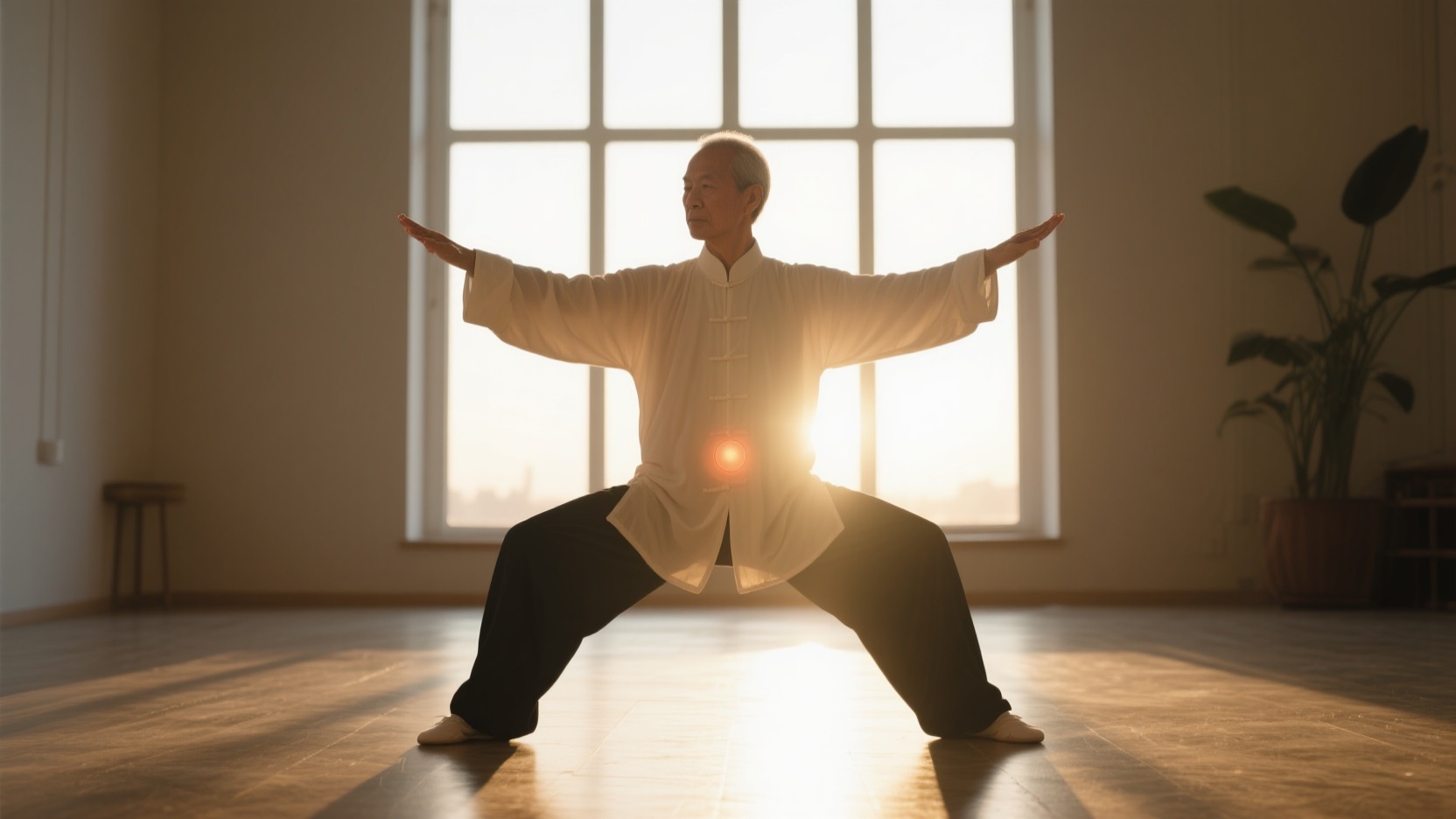
The Principle: Why "Sinking Qi" is Structural, Not Just Spiritual
The concept of Sinking Qi (Vital Energy) is fundamentally misunderstood as purely mental concentration. In reality, it is a physiological response to perfect structural alignment. When the body is correctly stacked, the center of gravity naturally drops, allowing the stored energy known as Yuan Qi (Original Qi) to settle easily into the Dantian (Lower Elixir Field), located about three finger-widths below the navel.
If your structure is flawed, you create muscular tension. This tension forces the Qi upward, causing the common sensation of "floating" or lightheadedness. Correcting this requires immediate attention to the pelvic floor and spinal alignment, ensuring the downward flow of energy rather than resistance.
The Alignment Mandate: Activating the Kua (Hip Creases)
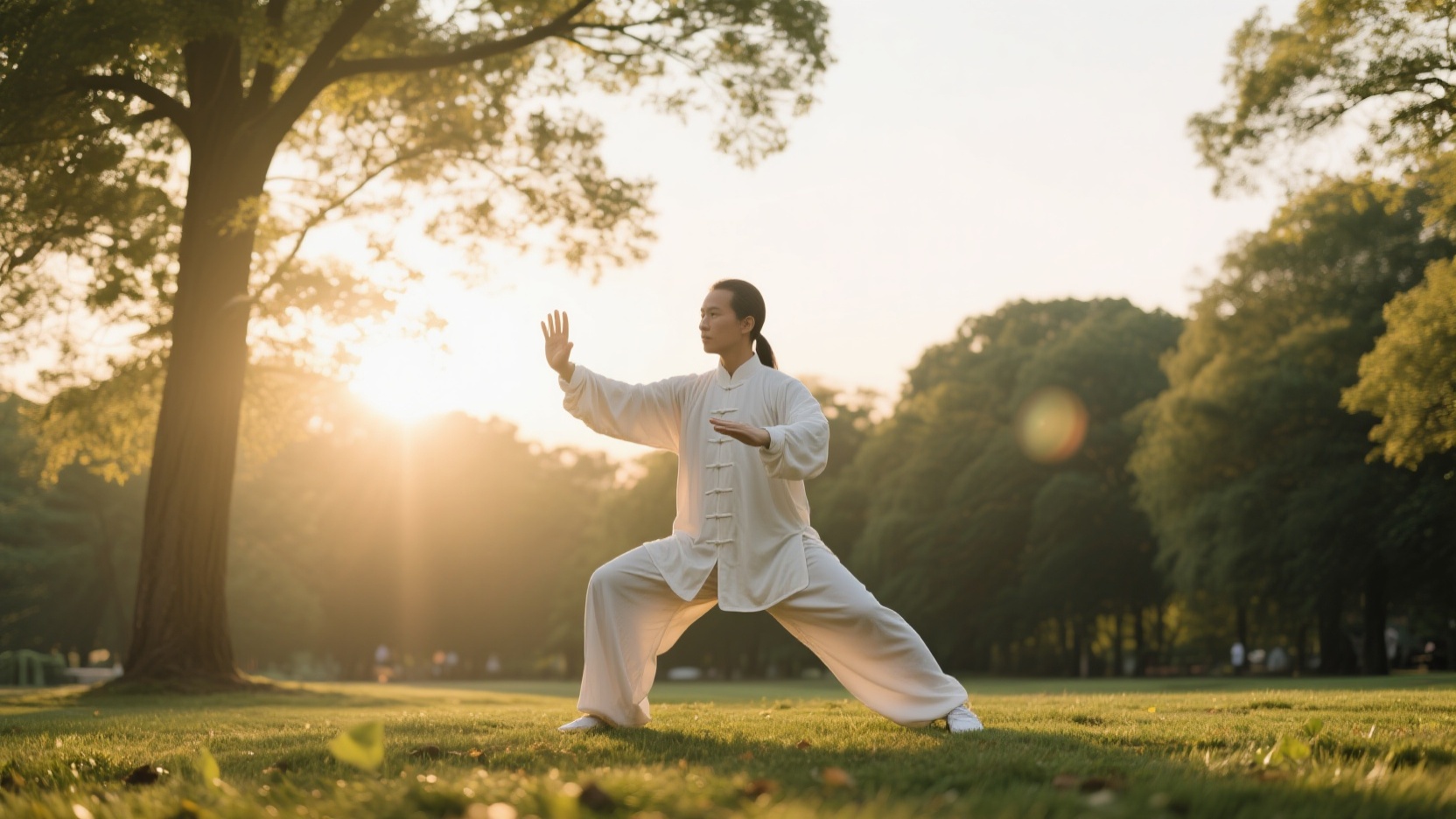
The primary mechanical key to sinking Qi is relaxing and folding the Kua (Hip Creases). Beginners often stand too straight or inadvertently tense their hip flexors. This stiffness locks the pelvis and prevents the transfer of gravitational force into rooting power.
To correct this, imagine you are gently sitting back onto a high stool. This slight flexion allows the Wei Lü (Tailbone) to drop naturally. When the Kua is open and relaxed, the body's center mass guides itself effortlessly toward the ground, achieving a feeling of being firmly weighted and stable.
The Three Foundational Corrections for Immediate Anchoring
Once you understand the Kua, the next step involves refining the entire vertical axis. These three corrections immediately optimize your skeletal support, dramatically helping you improve balance and stability in even the shortest practice session.
The Vertical Line: The Bai Hui to Hui Yin Connection
Visualize a perfectly straight line running through the center of your body. This line extends from the Bai Hui (Crown of Head) down through the core to the Hui Yin (Perineum). Gently lift the Bai Hui as if suspended by a string, simultaneously allowing the Hui Yin to relax downward. This dual action elongates the spine, releasing minor misalignments and maximizing skeletal integrity. When the skeleton supports the weight, the muscles relax, allowing the Qi to sink.
The Role of the Mingmen (Life Gate) and Lower Back
A common mistake in Tai Chi is allowing the lower back to arch (hyper-lordosis). This misaligns the entire torso. You must gently flatten the lower lumbar curve by slightly pressing the Mingmen (Life Gate) region—the area directly opposite the navel—backward. This ensures that the Dantian is correctly positioned in the vertical stack. Correcting the Mingmen position is vital not only for sinking Qi but also for crucial Tai Chi knee protection.
To achieve this profound foundational stability without years of self-correction, systematic training is essential. Stop guessing whether your posture is correct and start building a powerful internal structure today through precise, Master-led instruction.
Refining the Practice: Posture Correction and Internal Focus
Achieving structural alignment is the prerequisite. Maintaining it requires conscious, focused effort, linking the physical form to the internal energetics of the practice.
Preventing Injury: Essential Tai Chi Knee Protection
Sinking Qi puts significant weight onto the legs. Proper knee alignment is non-negotiable for longevity in practice. Ensure that your knees always track directly over your second or third toe. Never allow the knee to collapse inward or extend past the ankle when moving forward. This structural integrity prevents joint stress, a critical safety measure applicable across all major Tai Chi styles, including Yang, Wu, and Chen.
The Internal Gaze (Yi)
Once the physical structure is aligned—Kua open, spine long, knees safe—the mind must complete the process. The Yi (Intention or Mind Focus) directs the Qi. Gently place your attention inside the Dantian. Do not strain; simply observe the area. The consistent, quiet presence of the Yi acts as a gravitational anchor, solidifying the feeling of the Qi sinking and rooting your whole being to the earth. The body holds the energy; the Yi guides it.
Mastering the fundamental alignment required for Qi Sinking to Dantian transforms your practice from mere physical exercise into true internal cultivation. This essential step ensures longevity, power, and profound structural integrity. Don't waste years attempting to self-correct intricate internal mechanics. Gain instant access to a structured curriculum designed by Masters to ensure every repetition builds perfect form and maximizes internal energy cultivation, bypassing the common pitfalls of self-taught Tai Chi posture correction. Start your journey to balanced, powerful movement today.