Is Qigong suitable for pregnant women or individuals with severe pre-existing conditions?
This is perhaps the most critical question potential practitioners ask when considering beginning a serious Qigong practice. The answer is generally yes, Qigong is profoundly suitable for diverse populations, including those with serious or chronic health concerns, but only under two strict conditions: expert guidance and precise modification. Unlike vigorous physical exercise, therapeutic Qigong focuses on gentle, internal cultivation, prioritizing safe movement and conscious Qigong breathing to harmonize the body’s internal systems. However, certain advanced techniques and highly dynamic forms must be strictly avoided by individuals with pre-existing conditions or those who are pregnant. Understanding the principles of adaptation is essential to safely unlocking the benefits of any effective Longevity Qigong system.
Principle of Adaptation: Why Specialized Guidance is Non-Negotiable
Qigong (Energy Cultivation) works by optimizing the flow of Qi (Vital Energy) throughout the body’s meridian network. When dealing with complex conditions or pregnancy, the body’s internal landscape is already in a state of flux or compensation. Any practice must support, not disrupt, this process.
Understanding Internal Requirements (Jing, Qi, Shen)
For individuals with severe conditions, the focus must shift entirely to nurturing the core internal reserves. Traditional Daoist practice emphasizes the gentle cultivation of Jing (Essence), Qi (Vital Energy), and Shen (Spirit). Forceful movements or improper visualization techniques can lead to inappropriate energy manipulation. This can sometimes exacerbate existing issues rather than resolving them. Safe Qigong always starts with stabilizing the Dantian (Elixir Field).
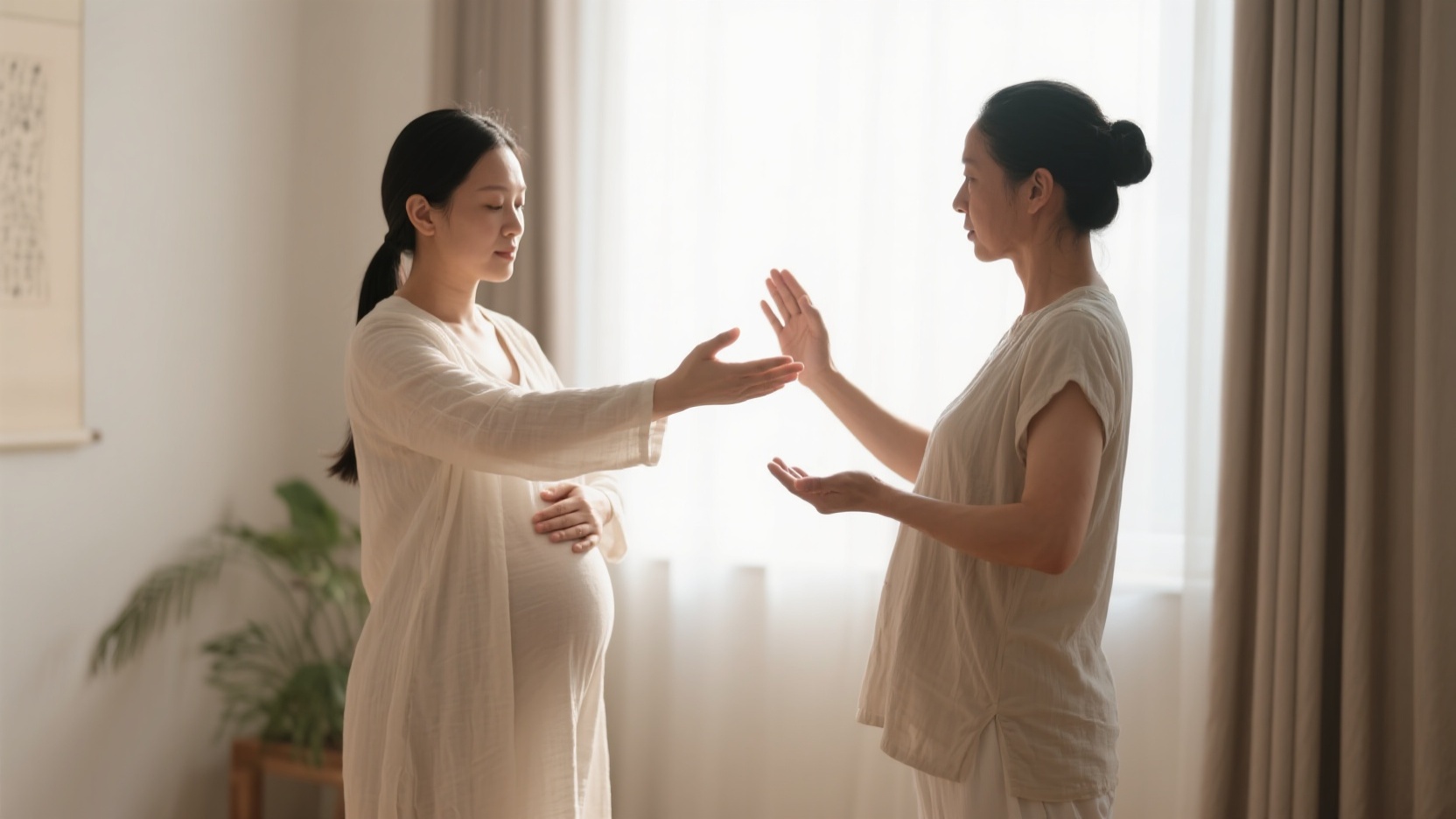
- For Pregnancy: The practice must prioritize grounding, stability, and slow, upward-moving energy to support the uterus and avoid pressure on the abdomen.
- For Severe Conditions: The practice must emphasize passive accumulation and stabilization of Qi, such as specific types of standing meditation, rather than active circulation, which may place undue strain on compromised organs or systems.
Technique Adaptation: Selecting Safe and Therapeutic Forms
Not all Qigong is created equal. The difference between a therapeutic, restorative practice and a vigorous, martial arts-based routine can determine safety and efficacy.
Choosing Gentle Over Dynamic Movements
For vulnerable populations, traditional forms like advanced Ba Duan Jin techniques (Eight Brocades) are generally safer than highly dynamic sets like the Wu Qin Xi benefits (Five Animal Play). The gentle stretching and coordinating breathwork of Ba Duan Jin can enhance circulation and mobility without the high-impact or deep stretching required by Wu Qin Xi.
- High-Risk Avoidance: Practices that involve holding the breath forcefully, rapid changes in posture (especially inversions or deep squats), or strong shaking movements should be entirely avoided.
- Focus on Wu Wei: The goal is to cultivate Wu Wei (Effortless Action). The movements should feel like flowing water, not forced exertion. This ensures the body receives maximum benefit with minimum stress.
If you feel intimidated by navigating the complexities of specialized Qigong or fear that self-taught routines might lead to unintended negative consequences, a proven, systematic curriculum is essential. Learn the precise modifications necessary for safe, transformative practice.
The Solution: Mastering Therapeutic Longevity Qigong
The ultimate safety solution lies in structured learning under a curriculum designed for foundational integrity. True Longevity Qigong is not about performing flashy movements, but about achieving deep, internal alignment guided by principles like Ziwu Liu Zhu (Meridian Tidal Flow).
Building Longevity Qigong Safely
A systematic approach allows the practitioner to progress incrementally, ensuring the body’s capacity always meets the demand of the exercise. This structure is particularly vital for severe conditions where the body requires time to adapt and heal.
Therapeutic benefits are realized when the practice is slow, consistent, and specifically adapted:
- Start with seated or supine Qigong (lying down).
- Master the foundational Qigong breathing techniques before adding movement.
- Prioritize the cultivation of stillness and awareness over physical exertion.
This careful, measured approach transforms Qigong into a powerful tool for self-healing and support, even during pregnancy or managing chronic illness.
Conclusion
Qigong is a powerful, safe path to wellness, provided the practitioner adheres to principles of modification and seeks expert guidance. For those dealing with severe conditions or pregnancy, the practice must be therapeutic, gentle, and rigorously structured to ensure support and safety while achieving the deep restorative benefits of internal cultivation.
Stop risking your health with fragmented, potentially harmful practices found online. Master the precise, systematic methodology that guarantees safety and efficacy, transforming decades of learning into months of focused mastery. Ensure every movement and breath is calibrated for optimal healing and longevity with the comprehensive training found in: