Is heavy sweating after Qigong practice a sign of detoxification?
Heavy sweating after Qigong practice often leads practitioners to a crucial question: Is this intense perspiration truly a sign of deep detoxification, or is it an indicator of potential imbalance? The short answer is nuanced: While some sweating is beneficial and signals the smooth movement of Qi (Vital Energy), excessive or cold perspiration may signal deficiency rather than cleansing.
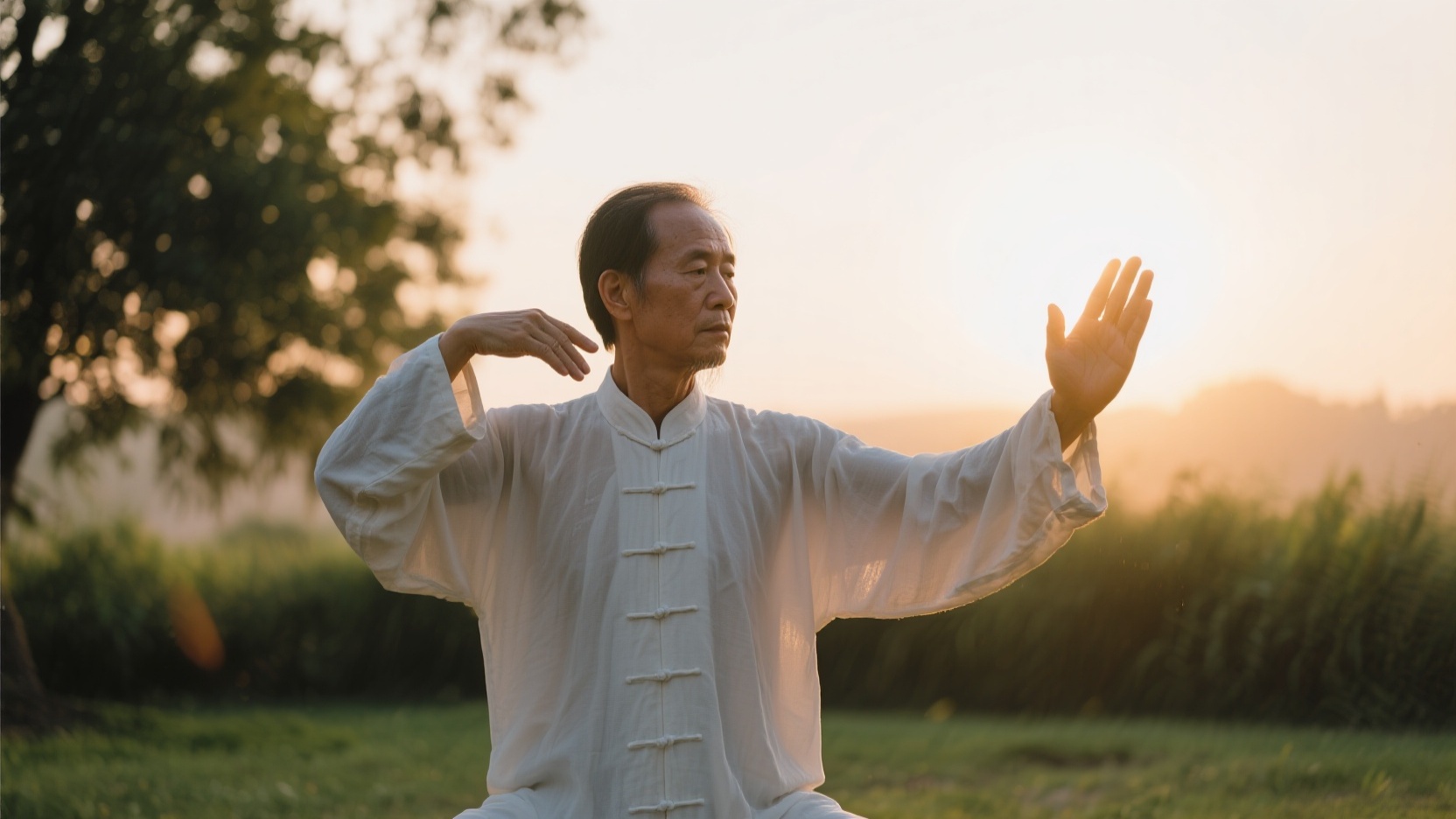
True Longevity Qigong focuses on regulating the body's internal thermostat. The aim is achieving a gentle, even warmth and activation of the internal systems, not physical exhaustion or drenching. Understanding this distinction is essential for optimizing your internal training and ensuring your Qigong practice is building up, not depleting, your foundational Jing (Essence). We will explore the precise criteria for beneficial sweating according to classical Daoist internal arts.
The Daoist View of Sweat: Wei Qi, Pore Control, and the Five Elements
In traditional Chinese physiology, sweating is primarily governed by the Lung system, which controls the surface of the body and the opening and closing of the pores. This pore regulation is managed by the Wei Qi (Defensive Energy).
Proper Qigong practice aims to strengthen the surface Wei Qi. This allows for a healthy, controlled release of pathogenic factors—a form of true detoxification—without simultaneously depleting the body’s deep, stored reserves of Jing (Essence) or fundamental Qi (Vital Energy). When practicing correctly, the body should feel energized and calm, not fatigued.
A balanced Qigong session should ideally produce a light, fine, and slightly oily sweat. This sweat is often localized, perhaps on the back, face, or chest, and indicates the smooth circulation of Qi and the warming of the Dantian (Elixir Field).
Heat Generation vs. Energy Leakage: Differentiating Sweating from Deficiency
In Qigong, the type and timing of the sweat are far more important than the volume. Not all heat generation or moisture release is beneficial. If the sweat is cold, watery, or excessive, and appears immediately upon beginning the exercise, it may signify a leakage or uncontrolled expenditure of Yang Qi, not purification.
Techniques such as the foundational Ba Duan Jin techniques (Eight Brocades) and the dynamic Wu Qin Xi benefits (Five Animal Play) are designed to harmonize the internal organs and cultivate internal warmth. If these gentle exercises cause immediate drenching and exhaustion, the practitioner might be pushing too hard, failing to utilize Qigong breathing correctly, or suffering from a pre-existing depletion.
In these cases, the body is expending its surface energy rapidly to cool itself, which is counterproductive to the goal of Longevity Qigong—which is accumulation.
If you are experiencing confusion regarding the intensity of your practice, it is crucial to seek structured guidance. Avoid the pitfalls of self-taught Qigong that can lead to energy depletion rather than revitalization. Learn the precise methods for conserving Jing and optimizing Qi flow with our Master-level curriculum:
Achieving Optimal Internal Regulation through Precision Practice
True detoxification in the Daoist sense is a slow, systemic process. It occurs through the rhythmic purification of the organ systems, often aligned with the Ziwu Liu Zhu (Meridian Tidal Flow). This requires consistency, patience, and absolute precision in form and internal focus.
Mastering the Role of Qigong Breathing and Intent
Precision in Qigong breathing is paramount to ensuring controlled heat and energy management. Deep, slow, abdominal breathing stabilizes the mind (Shen (Spirit)) and gently guides the Qi flow, preventing the rapid, uncontrolled release of heat through the pores. When the mind is calm, the Qi is regulated.
The goal of advanced Longevity Qigong is not to mimic a cardio workout. We seek an internal heat that is generated and contained within the Dantian, radiating outward to warm the limbs and organs evenly. This state is often accompanied by the feeling of being "cooked" or "steamed" internally, resulting in a gentle, cleansing perspiration.
If your Qigong practice consistently leaves you feeling centered, vitalized, and calm, the sweating, whether light or moderate, is beneficial. If you feel dizzy, cold, or drained afterward, you must review your method immediately and seek instruction that emphasizes core accumulation over physical exertion.
Conclusion: Prioritize Accumulation Over Evaporation
Heavy, drenching sweat is rarely the optimal sign of detoxification in Qigong. True longevity results from methodical, patient practice that prioritizes the accumulation and circulation of high-quality Qi, rather than the rapid expenditure of energy. The Master’s goal is to keep the energy contained, cultivated, and directed with mindful precision.
Stop guessing if your current methods are depleting your vital reserves. Gain the confidence that comes from training under a systematic curriculum designed to maximize internal benefits and master the subtle art of energy control, saving you years of potentially counterproductive self-practice. Start building your foundation of internal power today:


